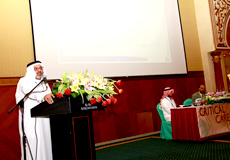
 Regional Executive Director of National Guard Health Affairs - Eastern Province, Dr. Ahmed Arfaj launched the Medical Intensive Care for adults Updates Conference in King Abdulaziz Hospital - Al Ahsa with the presence of significant consultants, specialists and medical technicians. He pointed out that "this conference was organized to cope with the rapid recognized development in intensive care for adults which is considered one of the delicate and sensitive specialties, as well as to present the latest findings of modern medicine to raise knowledge among professionals.
Dr. Arfaj Said "the conference discussed the latest diagnostic, therapeutic, and evidence based methods; the program included more than 20 scientific lectures in addition to four intensive workshops ". He also added: " the Scientific Committee was composed of an elite consultants and specialists from King Abdulaziz Hospital of National Guard in collaboration with a group of specialists from the University of Dammam and the Saudi Society for Respiratory Care (SSRC).
He said (The speakers were selected carefully and proved their leadership in their medical specialties, which had a clear impact on the participants who interacted with the presented papers.
One of the most updates that has been discussed on the conference was thediagnosis and treatment as well as raising the knowledge bar of modern medical devices, which have proved their usefulness for intensive care patients.
The President of the Scientific Committee, Dr. Alaa Ghobashi said that: “the papers presented by pioneers in intensive care for adults covered the most common diseases among patients, including severe hypotension (low blood pressure) with the possibility of several organ failure that makes therapeutic and diagnostic interventions very important in saving the patient's life, in addition, respiratory or kidney failure diseases were highlighted in the Conference
Dr. Alaa also said:” The conference which was organized by the Intensive Care Unit at King Abdulaziz Hospital and the Department of Academic Affairs included five debate sessions and discussed vital signs, blood toxicity, respiratory failure, quality standards for a better intensive care, and infectious diseases in intensive care units”.
Finally, the conference’s workshops focused on the practical approach by providing the use of the latest and most comprehensive equipment and it included an awareness exhibit that discussed different topics such as public health care and the respiratory system in particular, as well as the latest medical devices and equipments by specialized companies in this field.