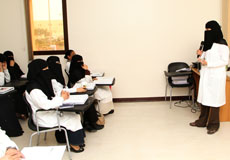
 Breastfeeding Committee in King Abdulaziz Hospital - Al Ahsa in collaboration with the Training and Development Department held Breastfeeding Counseling Provider Training Course for the 5th consecutive year. On this note, Dr. Ahmad Al Arfaj, the Regional Executive Director of the Ministry of National Guard - Health Affairs in the Eastern Region pointed out: “now that King Abdulaziz Hospital - Al Ahsa an internationally accredited Baby-Friendly Hospital, Which makes it a great responsibility to continue developing this success, and transfer the knowledge and expertise to other hospitals in order to spread awareness on this vital subject”.
In addition, Chairman of Pediatrics Department - King Abdul Aziz Hospital, and the course coordinator Dr. Hesham Al Girim said: "the Department conducted a 6 months breast-feeding rate study for mothers who visit the Department of Pediatrics’ clinics, the study demonstrated that the rate of breastfeeding from birth until the sixth month has reached 46%, which is a high proportion in the Kingdom", and he explained: “this is because King Abdul Aziz Hospital is an internationally recognized Baby-Friendly Hospital, that adheres to the Ten Steps to Successful Breastfeeding recommended by the World Health Organization”. Moreover, he added:” the objective of this course is to raise awareness on the importance of breastfeeding, correct any misconceptions, and to familiarize participants with breastfeeding rates as well as conduct training on effective communication skills”.
Patient educator and breastfeeding consultant Zahra Al Basri said:” a recent medical study published in the International Journal of Child and Adolescent Health confirmed that children who are breastfed are likely to have much better eating habits than those who rely on formulas when they grow older”.
She added:” the lectures included various topics such as effective communication skills, educating pregnant woman on the importance of breastfeeding as well as protecting breastfeeding from formula promotional practices”.
Finally, she pointed out that: "the papers presented included health workers education on ways to feed babies with special needs, helping mother to rely on breastfeeding even if they are working mothers, children supplementary nutrition, and some of the global strategies to promote breastfeeding, especially during pregnancy, and ways of inducing lactation".