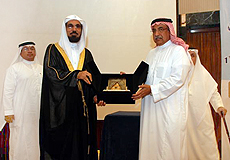
The International Awareness symposium on Palliative Care was held in Princess Norah bint Abdulrahman Al Faisal Oncology Center in King Abdulaziz Medical City – Jeddah and was organized by the Palliative Care Department with the participation of a selected number of medical specialists and experts from inside and outside the Kingdom. The symposium discussed several topics related to palliative care for better health care. One of the attendees was the Islamic scholar Sheikh Salman Al-Oudah who gave a lecture on how Islam regards palliative care which has been applauded by the audience.
The symposium started with verses from the holy Qur’an and then was opened by the Vice President of Postgraduate Education in King Saud bin Abdulaziz University for Health Sciences Dr. Rashed Al-Rashed. After that, the head of the scientific committee and consultant for palliative care in Princess Nora Oncology Center Dr. Arrej Matar gave a speech where she pointed out that these activities target all members of society and that the community needs palliative care services.
The Director of Princess Norah Oncology Center Dr. Abdulwahab Andejani gave a speech in which he explained that palliative care means that patients and the family members of the patients suffering from chronic and incurable diseases receive integrated and comprehensive care from a team of medical specialist. Palliative care is based on the right of patients and their families to know the stages of their disease and their right to improve their quality of life.
The Palliative Care Department in Princess Norah Oncology Center deals with around 800 new cases each year. The cases are transferred from different departments in KAMC – Jeddah and then the hospital's internal departments, outpatient clinics and home health care program follow up with them.
The Director of Academic Affairs Dr. Mansour Al Qurashi said that the goal behind hosting this symposium is to provide doctors with the latest information to improve the quality of health services. and said that the National Guard Health Affairs officials are doing their best to enrich the medical knowledge of their staff to reach the desired goals.
Dr. Rashed Rashed stressed that the NGHA values its academic, educational and training role and that it was in the forefront when it came to adopting the best health education and graduate studies programs in the country. He continued saying that these programs gave way to the first health sciences university in the Middle East with the latest medical, nursing and health sciences education. Moreover, this modern University was the first to provide a Masters degree in Health Informatics. It is also a host to the first Association for Health Informatics and had established a center for medical research. As such the International Awareness symposium on Palliative Care was held to complement these academic and educational programs.