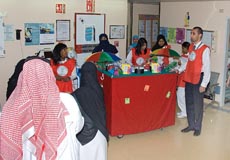
For the first time in the Saudi Arabian health sector, King Abdulaziz Medical City- Western province, launched last week a Pharmaceutical Safety Program, attended by the COO Colonel engineer Khalid Bakalka and acting executive director of the Medical Services Issam Al-Zeeti.
The program’s goals were to spread the importance of Pharmaceutical safety between members of the medical team in properly using and dispensing drugs.
The focus was to reduce errors resulting from not completing the medical prescriptions and highlighting the seriousness of using medical abbreviations when prescribing medicine that could be read or interpreted in a wrong way. Such practices may lead to Pharmacists dispensing the wrong medicine or dosage.
Dr. Ahmad Al-Attar, a neuro consultant and the pharmaceutical safety director in King Abdulaziz Medical City – Jeddah, added that in correspondence with the National Guard Health Affairs vision on patient safety, this program is dedicated to spread awareness on safety and reducing pharmaceutical errors. Studies showed a great percentage of these errors could be avoided by spreading awareness between workers in the health sector and enforcing rules and regulations that are in the interest of the patient.
He also pointed out that the activities of this program included visits where the team of the safety program such as doctors, pharmacists and nurses took field trips to in-patients wards, specialized clinics, outpatients clinics, Princess Nourah oncology center plus other medical and non-medical departments to highlight similar drugs in terms of forms, names and some applicable methods when prescribing such drugs to avoid confusion between them.
In addition, the program members gave advice and guidance about the proper use of medications and drugs plus the presence of a team to provide Pharmaceutical consultations. Dr. Al-Attar confirmed that most of the statistics in this regard give priority to patient safety, drugs safety plus prevention methods. He also stated that a study conducted by Jama medical journal in 1995, issue number 274 showed that more than 7000 death cases result annually from prescription errors according to the following points:
• 39% writing the prescription stage.
• 12% the prescription data input in the nurses device.
• 11% prescribing the medication in the pharmacy.
• 38% when the patient takes his/her medication.
Dr. Mohammad Aseeri, a member in the safety program said that medication safety is a mission that it’s not limited to the health sector personnel; however, it includes everyone related to the medication itself such as the patient and his family equally. It’s also a part of medication manufacturers, importers and those responsible for transfer and storage of those medications. Dr. Aseeri also said” The pharmaceutical safety awareness week in the NGHA is a confirmation in providing help to avoid risks that the patient might face.”